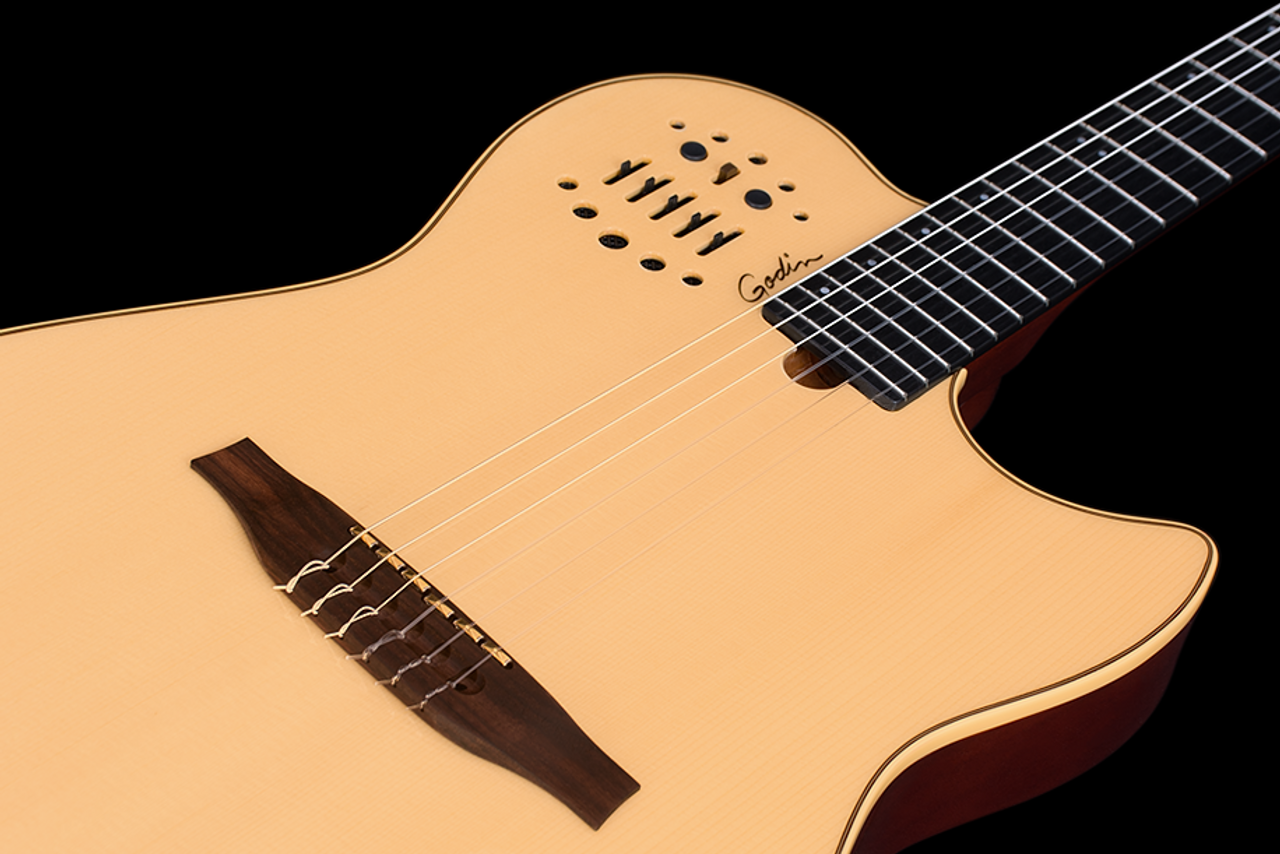
I’ve worked on and played countless nylon string guitars over the years, and one thing has become clear: there’s no one-size-fits-all instrument. Every player has different hands, technique, and musical goals. That’s why at Marfione Guitars, I don’t just sell guitars—I guide players toward the right fit.
If you’ve landed here expecting to click “add to cart” and call it a day, I’ll probably surprise you. I’d rather have a real conversation—sometimes two—before you buy. There are dozens of factors that go into choosing the right nylon acoustic guitar, and taking a few minutes to talk through them can mean the difference between “good enough” and the guitar you never want to put down.
What I’m sharing here only scratches the surface. These are just some of the main considerations I look at when helping players find their match. When we talk on the phone, we can dig deeper—discussing your hand size, preferred tension, body comfort, tone goals, even the kind of music you want to grow into. Every detail matters, and that’s where the real magic happens.
Nylon string guitars are a world unto themselves. They share a common ancestry but come in an extraordinary variety of designs, tonewoods, and construction methods. What most players first notice is the tone—warm, mellow, and full of expressive nuance. Nylon strings are more forgiving on the fingers than steel strings, which is why these guitars are favored for classical, flamenco, and fingerstyle music. But beyond that familiar softness lies a remarkable range of possibilities.
Builders across the globe—from boutique luthiers to large manufacturers—approach nylon string guitars in different ways. You’ll find instruments with fan bracing, lattice bracing, or hybrid systems, each influencing resonance, projection, and tonal balance. Some modern guitars use double tops or carbon-reinforced soundboards for added volume and responsiveness, while others stay faithful to traditional single-top designs prized for their purity of tone.
Tonewoods also make a dramatic difference. Cedar tops tend to produce a warm, immediate response ideal for fingerstyle players, while spruce offers more clarity and headroom—excellent for concert performance. Rosewood, ziricote, and cocobolo backs and sides provide depth and overtones; mahogany and maple emphasize focus and warmth. Even subtle choices, such as a raised fingerboard, can improve upper-fret access and playability.
Finish types matter too. A thin French polish, lacquer, or modern polyurethane finish can change how freely the top vibrates, influencing both tone and feel.
In short, nylon string guitars are anything but uniform. The combination of design, bracing, wood selection, scale length, and craftsmanship determines how each instrument responds to a player’s touch. For a newcomer, this can be overwhelming—there’s a lot to weigh beyond price or appearance.
This guide only touches on the essentials. When we talk one-on-one, I can help you sort through these choices, explain how construction details shape tone and comfort, and guide you toward a guitar that truly complements your playing style and goals.
Before selecting your guitar, ask yourself a few simple questions:
– Do I mostly play classical, flamenco, or contemporary music?
– Am I a beginner, intermediate, or advanced player?
– Do I favor fingerstyle or rhythmic strumming?
– Will I be performing live, recording, or mostly playing at home?
Your answers guide everything from body size to neck width. A flamenco guitarist might want a lighter build with lower action and a bright, snappy tone. A classical player will likely prefer a rich, resonant bass and balanced response. A crossover nylon string guitar might be the sweet spot for players moving between genres or coming from steel strings—it’s comfortable, versatile, and stage-ready.
Guitar size impacts tone and playability. A full-size classical body offers deep bass and wide dynamic range. Smaller or crossover bodies are more ergonomic—especially for players with smaller hands or those transitioning from steel strings.
A comfortable fit encourages good posture, relaxed technique, and longer, more enjoyable practice sessions.
Wood choice is one of the most defining characteristics of a nylon acoustic guitar.
– Cedar tops → Warm, rounded tone with quick response—great for fingerstyle.
– Spruce tops → Brighter, clearer projection, ideal for performance settings.
– Rosewood back & sides → Deep bass and shimmering overtones.
– Mahogany back & sides → Balanced tone with strong mids and warmth.
No wood is “better” than another—it’s about which tone moves you. The right pairing of tonewoods creates an instrument that feels alive under your hands.
Action—the distance between the strings and the fretboard—determines how easily a guitar plays. Lower action means less effort but can risk string buzz if set too low. Higher action increases projection and headroom but requires more finger strength.
Neck width also plays a big role:
– Classical guitars typically use a 52 mm nut.
– Crossovers often narrow that to 48–50 mm, closer to steel-string territory.
When clients visit or call me, we’ll often go over these dimensions carefully. Small ergonomic differences can make a world of difference in comfort and technique.
If you perform or record, amplification matters. Many crossover nylon string guitars feature built-in pickups or preamps, allowing you to amplify your tone without losing its natural warmth.
Systems like the Fishman Presys Blend or L.R. Baggs Element are popular because they capture the subtle dynamics that make nylon guitars so expressive.
Even if two guitars look identical on paper, they rarely feel or sound the same. Specs, tonewoods, and model names can only tell part of the story. The rest has to be experienced—how the neck feels in your hands, how the top responds to your touch, how the tone blossoms when you dig in just a little deeper.
That’s why I encourage every player to reach out before making a purchase. We can talk through what you’re looking for, your playing style, and what kind of response or feel you want from your next instrument. Often, a short phone call reveals insights that no spec sheet ever could.
And if you’re within traveling distance—or just passing through western North Carolina—I welcome visitors to stop by, spend time in the shop, and actually play the guitars. There’s no better way to know which one truly fits you.
Yes, Marfione Guitars is an ecommerce site, but it’s also a personal workshop. I’m here to make sure your purchase isn’t just convenient—it’s right. Whether that means fine-tuning a Marfione custom build or helping you select from a Kremona, Godin, or Cordoba model, the goal is the same: finding the guitar that feels like it was built for you.
Choosing the best nylon string guitar is less about the label and more about how it connects with you. When a guitar feels like an extension of your body and voice, practice becomes play and playing becomes joy.
At Marfione Guitars, I curate and customize instruments for every level—from traditional classical guitars and flamencos to versatile crossovers. Whether you need ergonomic comfort, professional performance, or a lifelong companion for personal study, I’ll help you find the one that makes you want to play every day.
Let’s talk before you buy. Together, we’ll make sure you end up with a guitar that feels like it was built just for you.