Custom guitar builds aren’t about ordering a list of specifications and waiting for a finished object to arrive. For me, they begin as conversations—about sound, feel, repertoire, and how a player connects with an instrument over time. My role is to listen carefully, understand what matters most, and help translate those priorities into a guitar with its own voice and character.
These builds are shaped by time at the bench and by years of working closely with players, established guitar manufacturers, and individual workshops. Hundreds of instruments have passed through my shop over the years—not simply to be inspected, but to be evaluated and set up with care. That hands-on exposure has given me a clear, practical sense of what allows a guitar to succeed musically, and where designs fall short.
My approach is informed by historical instruments—including Romantic-era designs and traditional concert classical guitars—but grounded in the realities of modern playing and long-term reliability. Rather than copying existing instruments, I focus on understanding why certain designs work and translating those ideas through my own work at the bench.
That balance between tradition and practicality guides decisions about structure, materials, and voicing, with the goal of building guitars that remain stable, expressive, and rewarding to play.
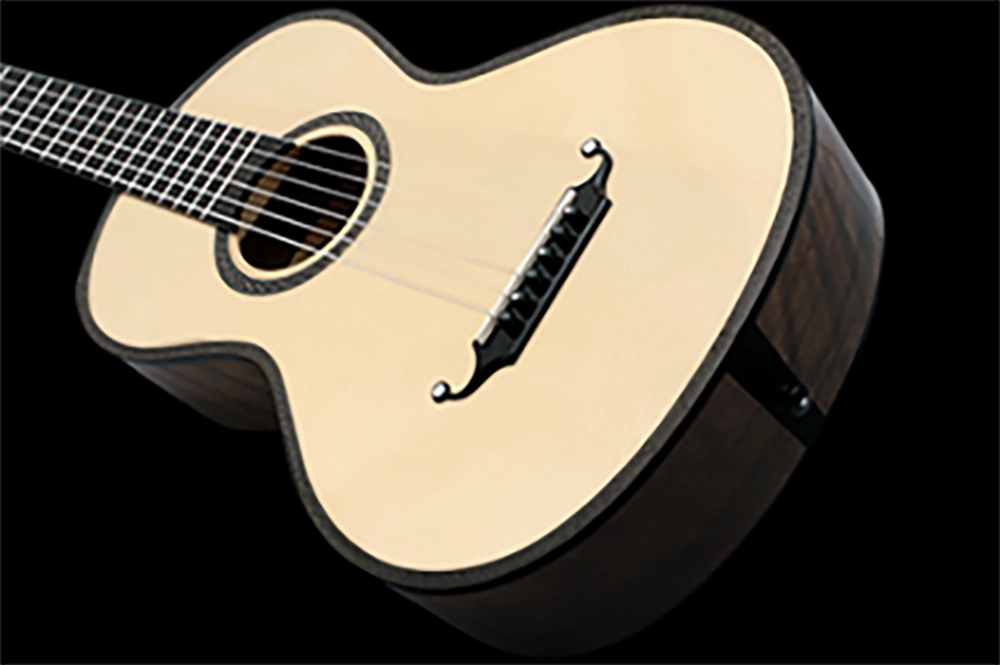
The Custom Guitar Builds section includes several distinct paths, each reflecting a different approach to sound, feel, and structure. Some builds lean more heavily on historical influence, while others are shaped by specific tonal or ergonomic goals discussed during consultation.
These paths aren’t rigid categories. They’re starting points—ways to frame conversations and clarify direction—while allowing each instrument to emerge on its own terms.
Custom builds work best when expectations are clear from the start. Most projects begin with discussion rather than a fixed specification list, and decisions take shape gradually through dialogue and experience.
I keep communication open and timelines realistic throughout the process. Custom guitars take time, and that time is essential to doing the work properly. The goal isn’t speed, but consistency and integrity in the finished instrument.
Custom guitar builds tend to make the most sense for players who have spent enough time with instruments to know what they respond to and what they’re missing. That doesn’t require being a professional, but it does mean being willing to engage thoughtfully in the process.
Custom work isn’t always the right solution. In many cases, a well-chosen and properly set-up existing instrument can meet a player’s needs just as effectively. Part of my responsibility is helping make that distinction honestly.
If you’re considering a custom guitar build and want to better understand whether it’s the right path, I’m always open to a conversation. These discussions are often the best way to clarify direction before any decisions are made.